
 Image 1 of 2
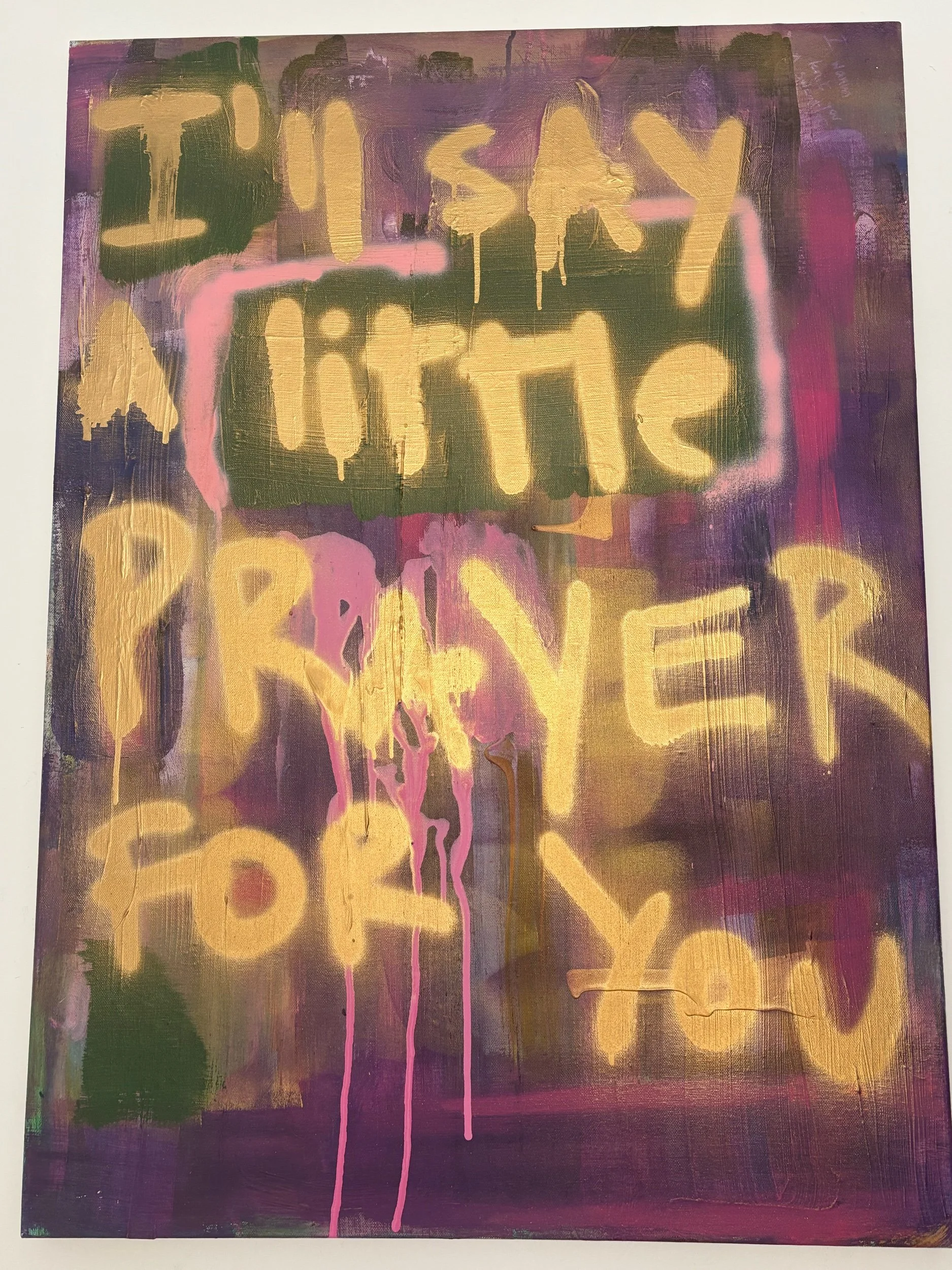 Image 2 of 2
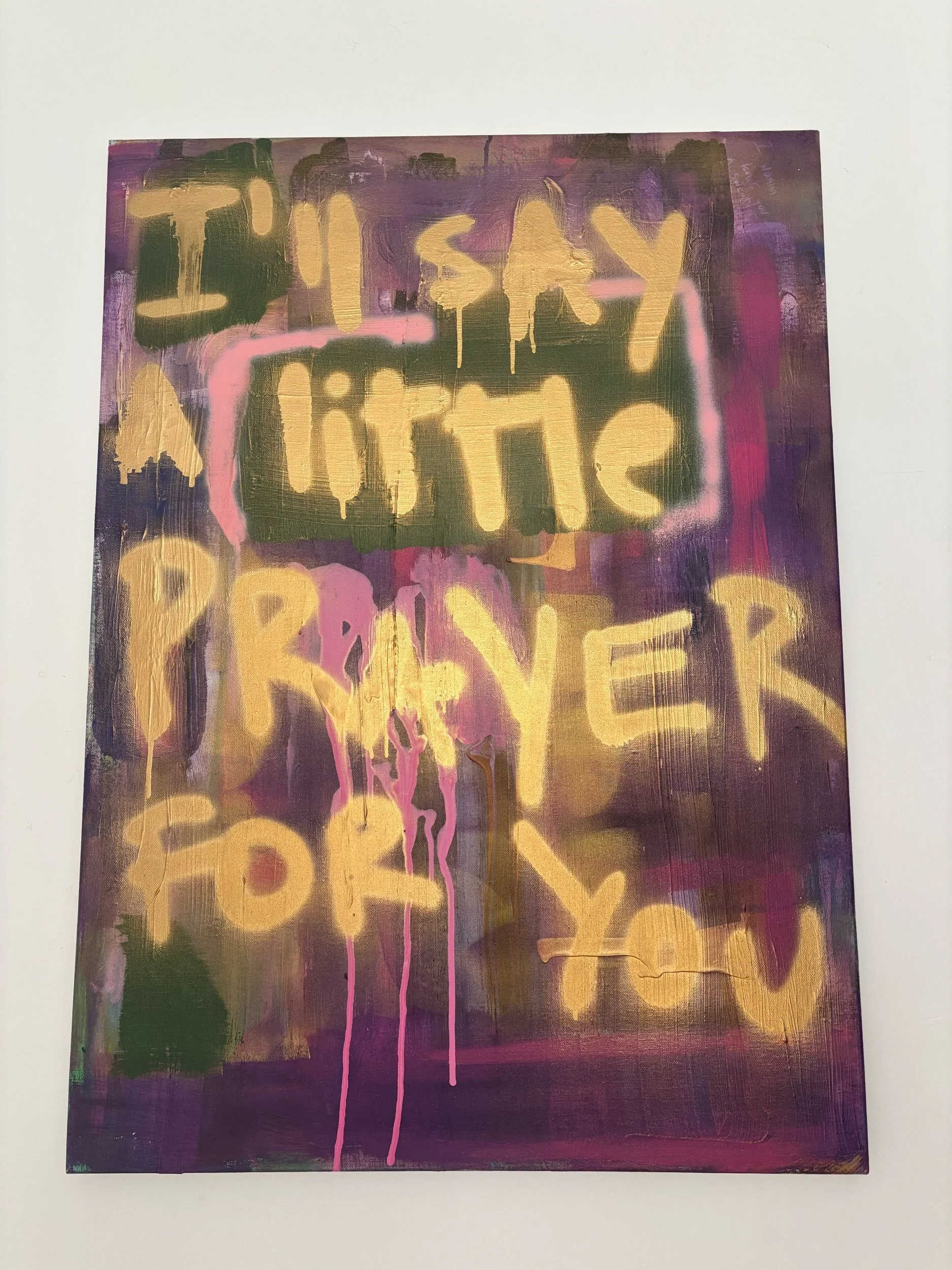
90 × 60 cm canvas. A riot of color—acrylics layered and collided like memories—sets the stage. Across the top, a golden spray-lettered confession: "I'll say a little prayer for you." The gold is luminous and a little theatrical, holy with a wink. Where the spray dripped, the letters bleed: tiny rivers of metallic staining the colors beneath. Those leaks are the workhorse of the piece—beauty surrendering to gravity, a saintly phrase corroded by real feeling.
It’s an homage to the Fugees’ prayer—soft, familiar, melodious—but the bleeding gilding twists it. This isn’t pure benevolence. The prayer is sincere, yes, but edged with a bruise: the metal runs as if even golden intentions can rust when stretched too thin. The result is both tender and distrustful, a vow to hold someone in thought while quietly closing the door on unconditional forgiveness.
Compositionally, the acrylics carry emotional weather: bright swathes for warmth, muddied tones where hurt pooled, and sudden neon slashes for the stubborn self that learned to say no. The spray’s drips cut across faces of color like teardrops, like railroad tracks—directional, decisive. Light hits the gold first, then finds the streaks and follows them downward, turning an amen into an indictment.
This piece is boundary work in pigment and spray: a ritual of keeping someone in prayer but not in your living room. The gold reads like ceremonial language; the leaks tell the truth. It’s an act of mercy with margins—an unorthodox blessing that knows when to walk away.